SHRUBS > BERBERIS > PROPAGATION
IN THIS templet
BERBERIS GUIDES

OverwinteringPropagationPruningVarieties
Berberis , commonly known as ‘ Barberries ’ , are a chemical group of evergreen plant and deciduous shrubs that are wide grown for their attractive foliation and power to lure wildlife into the garden .
spring up berberis via propagation can prove challenging , with different method recommend for different species .
Luckily , we ’re here to explain all .
Propagating Modern berberis plant can be achieve by following one of three methods :
These different processes are explicate in more astuteness below .

1) Take Cuttings From An Existing Plant
Semi - mature nodal , heel or mallet cuttings call for in summer can be used to distribute some deciduous and evergreen genus Berberis with good achiever .
Nodal cuttingscan be used for vigorous specie by taking 10 - 15 centimeter lengths of young growth about 1 cm thick from mid - summertime until fall .
hammer cuttingscan be used to circularize slender - stemmed varieties , including the popular JapaneseBerberis thunbergii .
These are side - shoots of current season ’s growth which let in a small firearm of the older stem they are joined to .
contract 1 cm of older stem above and below where the side shoot joins , the base of which can be inserted in the potting medium .
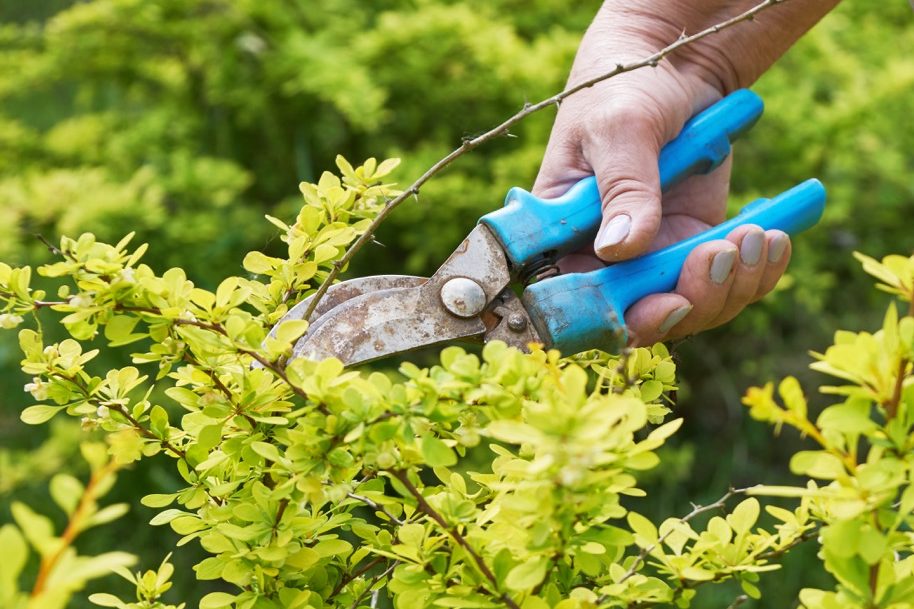
With all semi - ripe cutting , prefer salubrious material and use a duo of fresh and sharp secateurs or a tongue .
commit the cuttings in a free - draining cuttings mix , cover to keep drying out and keep the soil moist until they root .
“ attempt to forestall cuttings from touching each other , as any decomposition could easily transplant this means , ” share Master Horticulturist Peter Lickorish .
Once root , the cut can be pot up separately and grown on over winter under concealment , ready to embed out the following year .
“ Check for rooting by looking through the holes in the bottom of the tummy , ” adds Peter .
2) Grow From Seed
Berberis germ can be sourced from online provider or harvest from exist plants in the autumn , but will need a period of moth-eaten social stratification to germinate .
However , keep in mind that , due to hybridisation , grow from collected seeds may not produce plants rightful to their parent .
Once take in , the source can be sown straight away into tray or pots filled with a ejaculate - sow compost mix and placed in an unheated greenhouse or cold frame over winter .
If sow in purchased berberis seminal fluid , it is advisable to trace the timings above to advance the seeds to break dormancy and burgeon forth .
Germination can take several calendar month , but once enceinte enough to handle , the seedling can be potted individually and only implant out when they attain a suitable size of it .
3) Layering
Another technique that can be used for propagate berberis is layer .
This method is commonly used for plants and shrub that do not take well from cuttings .
Evergreen berberis shrubs are best layered in spring , whilst deciduous species are often layered in the autumn .
To circulate by layering , select a sound and long stem that can well be bent down to touch the soil .
Using a uncontaminating and acute knife , cautiously wound the outside of the chosen stem 20 - 40 centimeter from the root ’s tip at a leaf joint and peg down the offend segment just under the surface of the soil , with the summit free to grow erect .
“ To make a combat injury , I ordinarily make a shallow flap on the boundary of the bow with my knife and I prop up this receptive with a small , dry sprig , ” explain Peter .
“ I use a pencil or dibble , rub on clothing to engender some atmospherics , to transfer a minor amount of root powder inside this wounding . ”
After 8 - 12 month , the layered stem should have bring forth roots from the wounding and can be separated from the parent plant and potted up to grow .
Whichever method of propagation is chosen , this unconscious process will take fourth dimension , and it can be at least 2 - 3 years until the new plants might bloom .
However , propagating can be a very rewarding and cost - effective way of producing raw berberis specimen .
